
[ad_1]
Andrew Cunningham
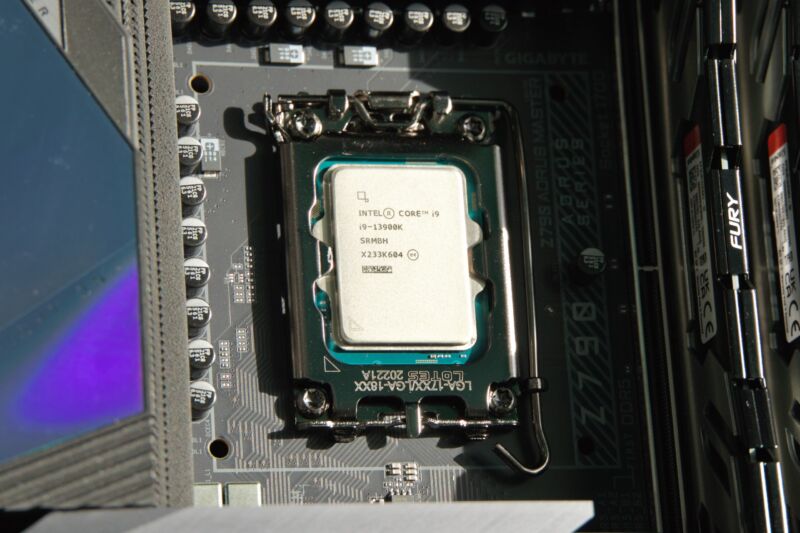
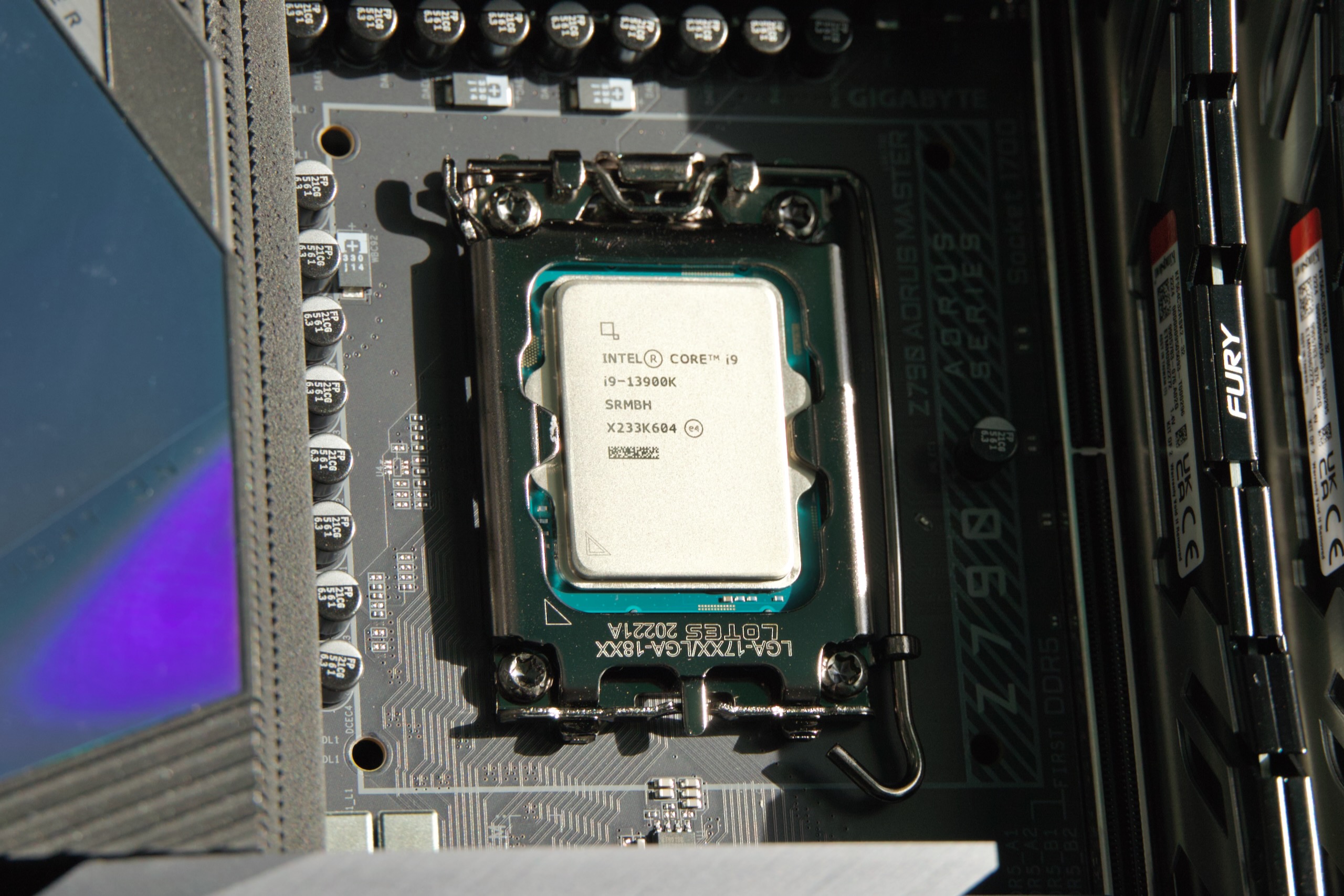
For several months, Intel has been investigating reports that high-end 13th- and 14th-generation desktop CPUs (mainly, but not exclusively, the Core i9-13900K and 14900K) were crashing during gameplay. Intel partially addressed the issue by insisting that third-party motherboard makers adhere to Intel’s recommended default power settings in their motherboards, but the company said it was still working to identify the root cause of the problem.
The company announced yesterday that it has wrapped up its investigation and that a microcode update to fix the problem should be shipping out to motherboard makers in mid-August “following full validation.” Microcode updates like this generally require a BIOS update, so exactly when the patch hits your specific motherboard will be up to the company that made it.
Intel says that an analysis of defective processors “confirms that the elevated operating voltage is stemming from a microcode algorithm resulting in incorrect voltage requests to the processor.” In other words, the CPU is receiving too much power, which is degrading stability over time.
If you’re using a 13th- or 14th-generation CPU and you’re not noticing any problems, the microcode update should prevent your processor from degrading. But if you’re already noticing stability problems, Tom’s Hardware reports that “the bug causes irreversible degradation of the impacted processors” and that the fix will not be able to reverse the damage that has already happened.
There has been no mention of 12th-generation processors, including the Core i9-12900K, suffering from the same issues. The 12th-gen processors use Intel’s Alder Lake architecture, whereas the high-end 13th- and 14th-gen chips use a modified architecture called Raptor Lake that comes with higher clock speeds, a bit more cache memory, and additional E-cores.
Tom’s Hardware also says that Intel will continue to replace CPUs that are exhibiting problems and that the microcode update shouldn’t noticeably affect CPU performance.
Intel also separately confirmed speculation that there was an oxidation-related manufacturing issue with some early 13th-generation Core processors but that the problems were fixed in 2023 and weren’t related to the crashes and instability that the microcode update is fixing.
[ad_2]
Source link