
Fast adoption of e-commerce, online streaming media, and workplace productivity tools — particularly during the Covid pandemic — has massive strain on current-day telecom networks.
Nurphoto | Getty Images
Some of the world’s largest tech firms are backing a new kind of telecoms network which they say will help reduce overall power consumption of data-hungry artificial intelligence applications and accelerate the transition to next-generation 6G mobile internet.
The likes of Microsoft, Google, Intel, and Sony are supporting the little-known initiative referred to as the IOWN Global Forum, a worldwide collective of cloud hyperscalers, telecom groups, and chipmakers.
These companies are aiming for the full deployment of a “all-photonic” network, or APN, by 2030.
What are photonic networks?
IOWN Global Forum is a global group aiming to develop technical standards for all-photonics networks.
Dozens of major tech firms have signed up as backers. They include the likes of Microsoft and Google, which are behind two of the largest public cloud platforms.
Telco firms such as NTT, Ericsson and Nokia are also core members of the group. Chipmakers play a key role, too, with Intel and SK Hynix as members.
Photonic networks, in a nutshell, are networks that use light rather than electrical impulses to deliver data. This approach is expected to result in far lower energy consumption for transmitting data around the world.
Currently, power usage is a big problem in the technology industry. Rapid adoption of e-commerce, online streaming media, and workplace productivity tools — particularly during the Covid-19 pandemic — has forced companies to reevaluate their network infrastructure and explore new ways of delivering data.
What’s the goal?
The goal is to alleviate strain on current-day telecom networks, which is expected to worsen in the coming years amid continued growth in digital adoption and demand for AI — particularly generative AI.
“Mobile traffic is growing more and more every day,” Katsuhiko Kawazoe, chair of the IOWN Global Forum, told Tech Zone Daily via email. “There is a need to make efficient use of radio spectrum and of power.”
IOWN technology allows operators to optimize the use of spectrum and power in mobile networks in real time depending on the circumstances, Kawazoe added.
For example, a major city may require more radio units during office hours than at night. Residential areas, however, will require more units to serve them during the evening, when workers return home.
IOWN technologies will “allow us to power down for certain circumstances in the network,” Gonzalo Camarillo, head of implementation components at Ericsson and chair of the marketing steering committee at IOWN Global Forum, explained.
Reducing AI’s climate impact
Large language models, like the one behind OpenAI’s ChatGPT, require huge amounts of training data and powerful graphics chips called GPUs. But that comes at a great cost to the climate.
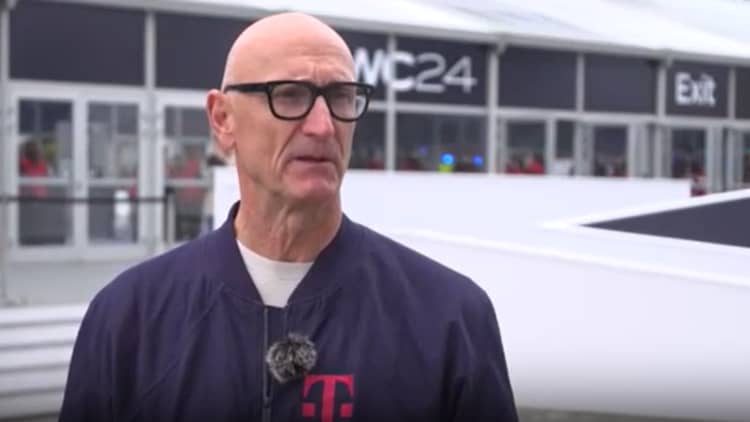
Masahisa Kawashima, IOWN technology director at NTT Corporation and chair of the technology working group at IOWN Global Forum, said photonic networks could make smaller data centers far more powerful.
“Data centers are becoming bigger and bigger, and hyperscale data centers are a struggle for societies’ carbon reductions,” Kawashima said.
“Many data centers are too concentrated in a small area, and that’s causing a big energy demand for that area. But if we use IOWN APNs, we can have users deploy data centers over a wide area,”
Each of the data centers on this network would resemble a “hyperscale” data center, even if it’s medium-sized, Kawashima said. Developers of AI models can use shared GPU infrastructure in smaller areas to develop their AI models.
“AI has become the center of competition for many industries, including automotive and pharmaceuticals. Many enterprises are interested in operating their own GPU infrastructures,” Kawashima said.
What will IOWN’s tech be used for?
The IOWN Global Forum is exploring several use cases for photonic networks with its partners. One is for banks to use IOWN tech in their backend infrastructure.
Banks could operate two separate data centers located in different sites and then replicate their data across both sites, Kawashima said. This would help them “achieve resilience” in their infrastructure, he added.
Banks and other financial services firms need to send data back and forth at a rapid pace to ensure consistency of their services and make sure transactions are being processed smoothly — whether it’s deposits, withdrawals, or wire transfers.
Mitsubishi UFJ, a Japanese bank, is one of the major institutions using IOWN technologies for financial infrastructure.
Another use case is broadcast and media streaming. Today’s modern streaming platforms, like Netflix and Amazon Prime, use huge amounts of data to facilitate cloud-enabled delivery of movies and TV shows.
With IOWN, the aim is to make this a less power-intensive process, while increasing the capacity of data that can be sent across the networks and lowering latency.
Sony is working with NTT to develop a wide-area remote production platform for broadcast stations, newsrooms, and event halls.

“Distributed computing is really possible, and soon it will be greener and more energy-efficient,” Katsutoshi Itoh, head of connectivity technologies at Sony’s research and development center, told Tech Zone Daily.
It could help 6G transition, too
IOWN technologies are expected to boost the transition to 6G, the next generation of mobile networks beyond 5G.
NTT’s Kawashima said optical network technology could make it less costly for telecom carriers to deploy 6G antennas. It could also enable them to share their radio towers for more efficient network optimization.
“To deploy antennas, we need optical fiber to connect antennas to radio data centers,” Kawashima explained. “So, if we use an IOWN APN to connect antennas to base stations, then probably we can reduce the cost of antenna deployment.”
“APNs will allow mobile network operators to share radio towers,” Kawashima added. That’s because, with 5G and 6G, “many carriers are concerned about the heavy investment in antenna deployments.”
IOWN tech is still in the early stages of development. It will be a few years before photonic networks truly have an impact on industries.
For now, the IOWN Global Forum is working toward achieving its main goals by 2030. The forum is targeting real-world commercial applications of the technology by this year.

