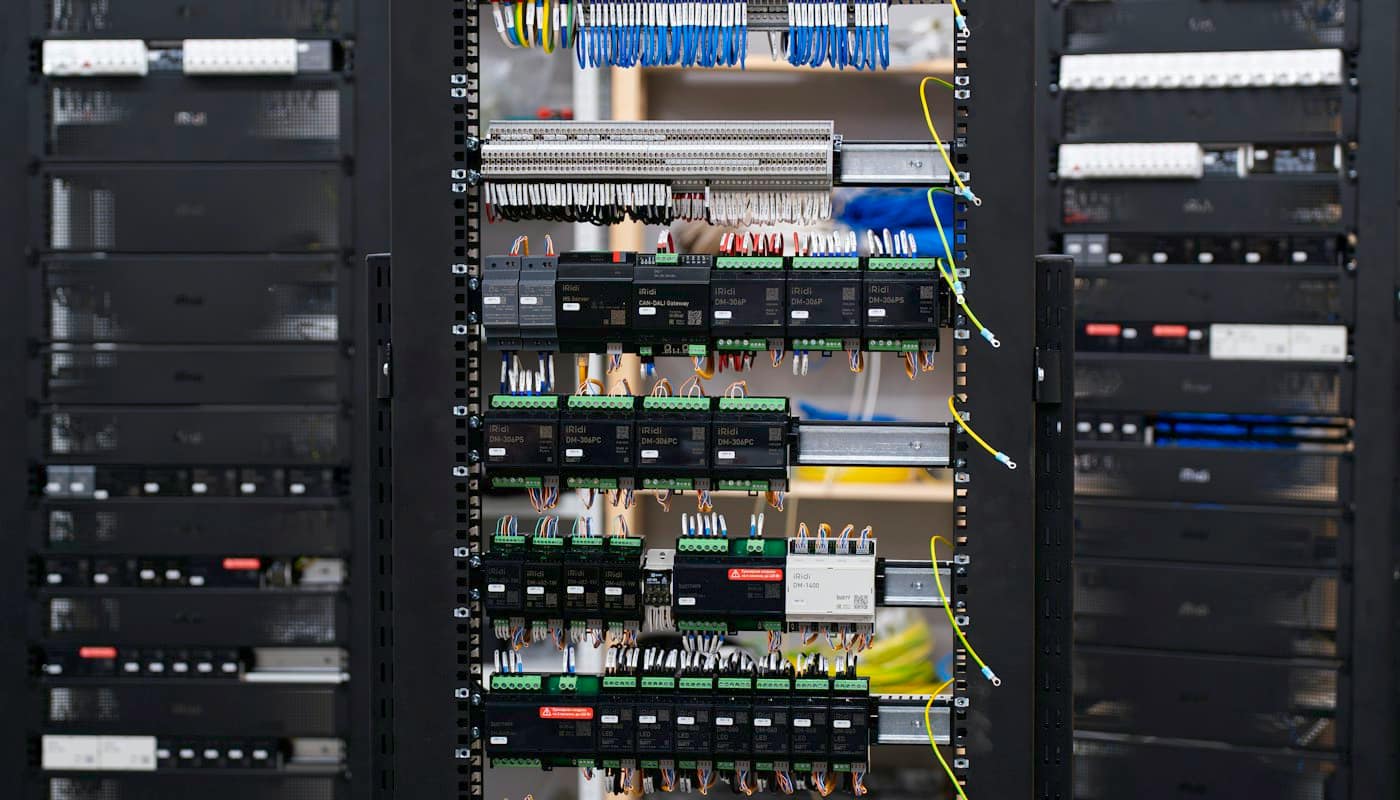
Photo by Aleksandr Lyaptsev on Unsplash
Sponsored content. This article was supplied by a third party and includes links to a commercial service.
Smart buildings promise a lot. Sensors track temperature and occupancy, software adjusts lighting and airflow, and dashboards show the status of every system in real time. For fire safety, that connectivity can be a real advantage, because detection and alarm equipment can report faults faster than any person walking the halls. But technology only works while it is switched on, connected and maintained, and every building system eventually needs service.
The gap between a connected building and a protected building appears when something goes offline. A firmware update, a network outage, a failed power supply or a scheduled sensor replacement can leave part of a building’s detection unavailable. The dashboard may flag the problem, but it cannot walk a corridor, smell smoke or open a door to check. That is a job for people.
For owners and facility teams in Southern California, The Fast Fire Watch Company in Irvine, CA is one way to arrange that human layer when digital protection is temporarily out of service. The Fast Fire Watch Company provides trained patrols that bridge the gap while technicians complete their work, so that the building remains covered from the first minute of an impairment to the last.
Why smart systems still need backup
Smart building platforms are built from many parts: sensors, controllers, gateways, networks and cloud services. Each part is a potential point of failure. A single misconfigured gateway can silence a whole floor of devices, and a software update can change how alarms are routed. Facility teams know this, which is why testing and maintenance are constant, and why impairments are a normal part of running a modern property.
There is also the human factor. Alerts can be missed, notifications can go to the wrong inbox and automated messages can be ignored after too many false alarms. A trained guard adds a layer that does not depend on a screen or a notification. They are present, observant and able to react immediately, which is something even the best software cannot fully replicate.
What a patrol adds to a connected building
A fire watch patrol brings three things that technology cannot. First, physical inspection: guards can see, hear and smell conditions that sensors might miss. Second, judgment: they can tell the difference between steam from a kitchen and smoke from an electrical fault. Third, accountability: every round is recorded by a named person, creating a clear trail for inspectors and insurers.
In offices, labs and mixed-use campuses with advanced controls, guards are also useful for confirming that doors, dampers and stairwell pressurization behave as expected during an impairment. If a system is partially disabled, a patrol can verify that the remaining parts of the building are working and that exits remain clear.
What The Fast Fire Watch Company adds to a connected building
The Fast Fire Watch Company lists data centers and commercial high-rise buildings among the properties it covers. Its description of emergency coverage includes GPS-tracked patrol logs and timestamped photos from the first round, which suits a building where everything else is already measured and recorded.
The company also says every guard completes a site-specific safety briefing before starting, that a dedicated site contact handles updates and schedule changes, and that extra shifts can be arranged if a repair takes longer than planned.
Planning for planned downtime
Most smart building impairments are planned. Teams know when a controller will be replaced, when a network will be upgraded or when a panel will be reprogrammed. Because these events are scheduled, the fire watch can be scheduled too. The facility manager shares the start time, the affected zones and the expected duration, and the provider assigns guards and builds a route around the impaired areas.
The best plans include a clear definition of what counts as the end of the impairment. It is not enough for the technician to say the system is back. Someone should confirm that the devices are reporting, the panel is clear of faults and the authority has been notified. Only then should the fire watch be stood down, and the log should record that decision.
Emergency situations in technology-heavy properties
Not every impairment is planned. A power surge, a failed battery backup or a network fault can take detection offline without warning. In those moments, Emergency Fire Watch Security gives the property a fast response while the technical team investigates. The sooner guards are on site, the shorter the window of exposure, and the more comfortable occupants and tenants are likely to feel.
Technology-heavy properties may also contain sensitive spaces, such as server rooms, data closets and equipment labs. Guards should be briefed on how to patrol these areas safely, which doors they may open and who to contact if access is needed. Clear instructions prevent accidental interference with equipment while still allowing the patrol to cover every area.
Documentation that suits an audit
Smart buildings generate plenty of digital data, but a fire watch record still needs to be clear and human-readable. Each entry should show the time, the area covered, what the guard observed and any action taken. Paper or digital, the log should be complete, legible and kept on site so that an inspector can review it without waiting for someone to export a report.
Facility teams can add context by attaching the impairment notice, the contractor’s work order and the date the system was restored. Together, these documents tell a clean story: what was shut down, why, how the building was protected and when normal operation resumed. A tidy file is one of the easiest ways to show that a property takes its responsibilities seriously.
Training on the building’s own technology also pays off. Guards who understand which indicators matter on the panel, which zones are affected and how the building’s alarm sequence works can report problems more accurately. A short briefing from the facility engineer before the first round is a modest investment that improves the quality of every report that follows.
Choosing the right provider
When selecting a provider, facility teams should look for clear communication, reliable scheduling and good documentation. Ask how guards are briefed, how rounds are recorded and how quickly extra coverage can be added. A provider that explains its process plainly is usually a provider that follows it consistently, and that consistency is what a building needs when its systems are down.
It is also worth asking about local knowledge. Requirements for fire watches differ across jurisdictions, and a provider familiar with the area can help the property team meet them without delay. Whether a building is in a business park, a campus or a downtown tower, local familiarity makes a practical difference when time is short.
Smart buildings are meant to make life easier, and in most ways they do. But convenience can create a false sense of security if owners forget that systems occasionally fail. Keeping a reliable fire watch option available is a simple, low-cost way to protect the investment in technology and the people who use the building every day.
Portfolios that span several cities benefit from one familiar provider across all of them. Teams managing offices in Inland Southern California, for example, can look at The Fast Fire Watch Company in Riverside, CA as a model for how coverage is arranged near the property so that guards arrive quickly and know the area. Consistency across locations keeps the process simple for busy facility managers.
In the end, smart buildings and fire watch services are partners rather than competitors. Technology gives early warning and rich data, while people provide judgment and physical presence. When both are in place, a building is protected during normal operation and during the inevitable moments when its systems need attention, and that combination is what keeps occupants safe.