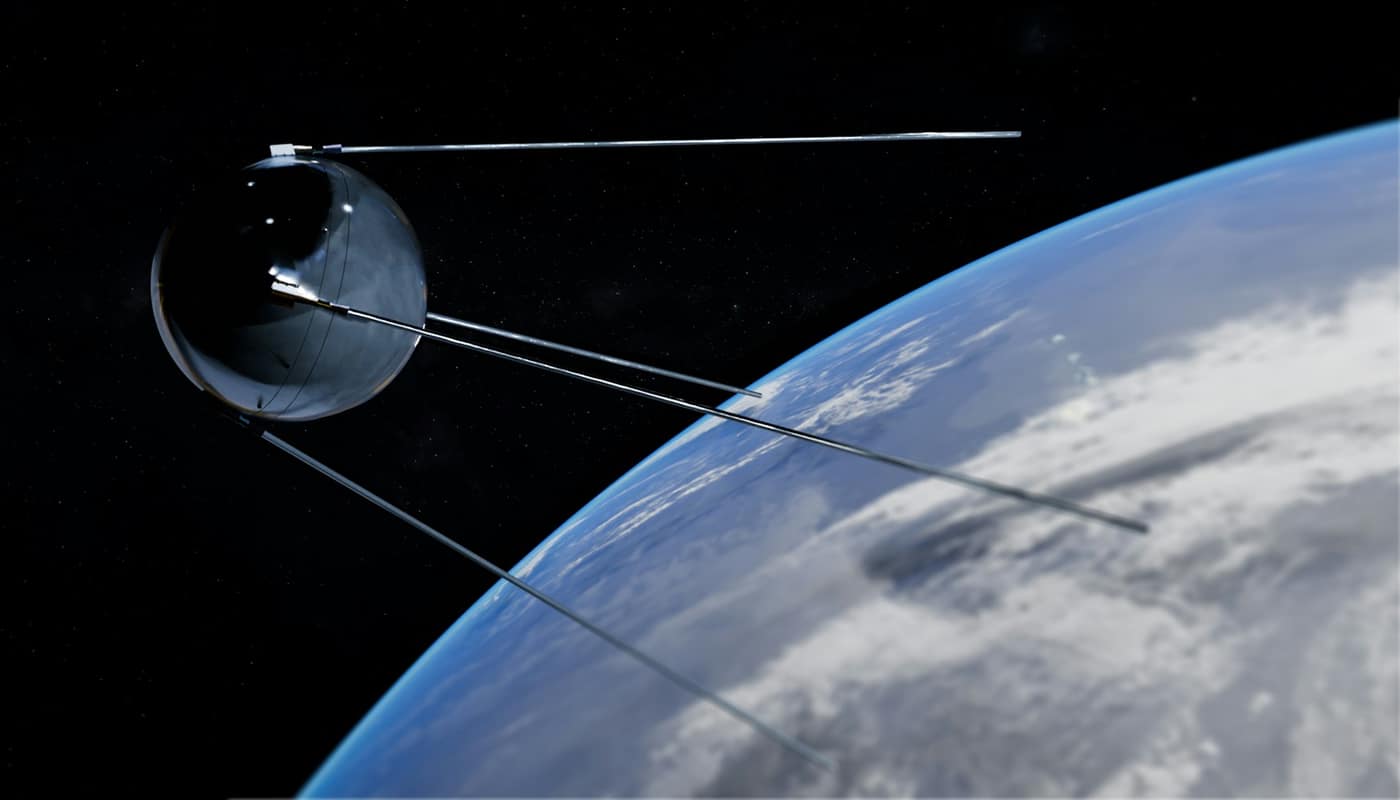
Within the next two weeks, a radio signal will need a full day to travel one way between Earth and Voyager 1, a spacecraft launched in 1977. This article explains what that milestone means, how the probe is being kept running on a shrinking power supply, and what engineers have not yet explained.
What is a light-day, and how far is it?
A light-year is the distance light travels in a year. A light-day is the same idea over 24 hours. Radio waves travel at the speed of light, so a light-day is also the distance a signal covers in a day.
Illustrative arithmetic makes the scale concrete. Light moves at 299,792.458 kilometers per second, and a day has 86,400 seconds. Multiplying gives about 25.9 billion kilometers. An astronomical unit (AU), the average Earth-Sun distance, is about 149.6 million kilometers, so one light-day works out to roughly 173 AU.
NASA’s Voyager 1 mission page counts down to the moment the spacecraft reaches that distance. As of early November 2026, the page shows a date of November 18, 2026. The page also says the spacecraft is “nearing” a distance one light-day away from Earth. The exact timing depends on how the distance is calculated, so the date is best read as approximate.
| Quantity | Approximate value |
|---|---|
| One light-day | about 25.9 billion km, or about 173 AU |
| One-way signal time at that distance | about 24 hours |
| Round trip (command out, reply back) | about 48 hours |
The 173 AU figure and the light-time rows are straightforward consequences of the speed of light. Only the November countdown date comes from NASA.
How did Voyager 1 get so far?
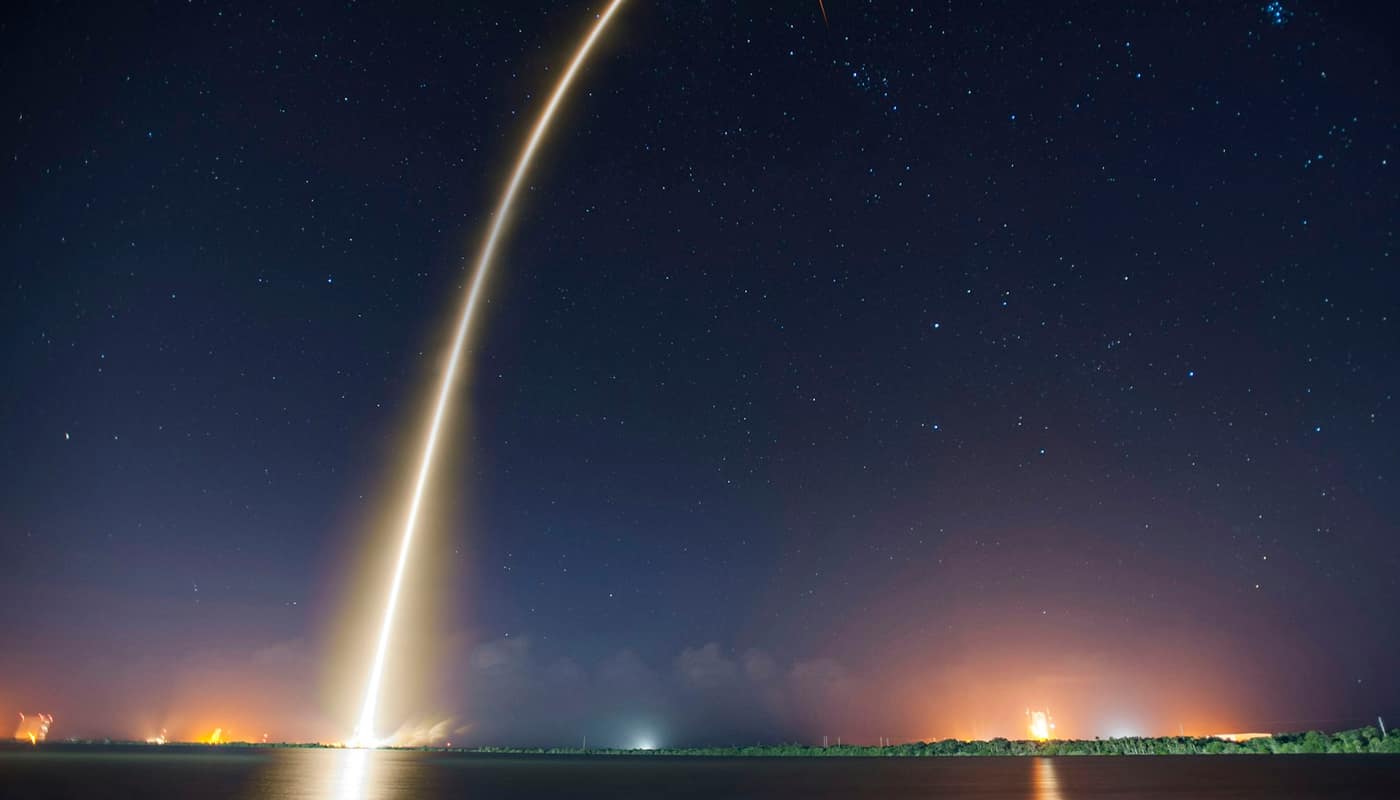
Voyager 1 launched from Cape Canaveral, Florida, on September 5, 1977, according to NASA. Its twin, Voyager 2, launched on August 20 of the same year. Both were built to tour the outer planets, and both kept going.
NASA’s page gives Voyager 1’s distance as 164.7 AU as of August 21, 2024. Reaching about 173 AU by November 2026 means covering roughly 8.4 AU in about 819 days, or around 3.7 AU per year. That is a rough average derived from two figures, not a number NASA states, but it shows why the milestone arrives now.
In August 2012, NASA says, Voyager 1 became the first spacecraft to exit the heliosphere, the bubble of charged particles blown outward by the Sun. It now travels through interstellar space, the region between stars. For a longer look at how astronomers observe distant objects with very different tools, see our explainer on how the James Webb telescope looks back in time.
Why does a light-day matter if nothing physical changes?
Nothing happens to the spacecraft when it crosses the line. The milestone is symbolic, but it makes a practical constraint easy to grasp: conversation with Voyager 1 is slow.
When engineers send a command, they cannot know the result for about two days. They cannot adjust in real time. Every command has to be checked carefully, because a mistake cannot be undone quickly. This is why the mission team works conservatively and why anomalies, when they appear, can take weeks to diagnose.
The delay also explains why Voyager 1 carries on-board fault protection. This is software that detects a problem and automatically puts the spacecraft into a safe, stable configuration, giving engineers time to respond. The spacecraft has to look after itself between conversations.
How is a 1977 spacecraft still powered?
Voyager 1 has no solar panels. At that distance, sunlight is far too weak to be useful. Instead, it uses three radioisotope thermoelectric generators, devices that convert heat from decaying radioactive material into electricity. According to NASA, each produced about 158 watts at launch, or roughly 474 watts in total (3 times 158).
That output declines as the radioactive material decays and the conversion hardware ages. NASA’s page does not give a current figure in the pages reviewed for this article, but the practical result is clear: the team has had to turn things off, one piece at a time, to stay within the budget.
On April 17, 2026, NASA says, engineers at the Jet Propulsion Laboratory commanded the shutdown of the Low-energy Charged Particles experiment, an instrument that measures particles around the spacecraft. The mission page describes the move as the best way to keep Voyager 1 operating as its power supply dwindles.
A further NASA update, dated October 29, 2026, says a months-long effort to stretch the power supply was completed in September. According to that update, the work involved switching off certain powered devices and replacing them with lower-power alternatives, with the aim of letting the remaining science instruments run longer.
What happened during the recent communications pause?
The same October update describes a brief loss of contact. NASA says the spacecraft stopped being heard and then returned to contact on October 20 without needing intervention from the ground, after a gap of about two days. The team then sent commands to troubleshoot.
NASA’s mission team has said it does not yet fully understand the cause. The pages reviewed do not provide a confirmed explanation, and reports that circulated about thrusters switching to backups are preliminary and not confirmed by the primary text reviewed here. Anyone reading about the cause should treat it as an open question.
The episode is a reminder that this is a very old machine, far beyond its design life, with limited ability to repair itself.
Which instruments are still working?
NASA’s own pages are not fully consistent on this point. One section describes two science instruments as operating after the April shutdown, while another section lists four as still functioning: the cosmic ray telescope, the low-energy charged particles experiment, the magnetometer and the plasma waves experiment. The low-energy charged particles instrument was the one turned off in April, so the longer list appears to predate that change.
Because the pages disagree, this article does not state a definitive count. What is clear is that the number of working instruments has fallen over time and that engineers expect further reductions as power declines.
The remaining instruments matter because Voyager 1 is, in effect, the only human-made probe sampling the plasma and magnetic field of interstellar space at this distance. Its measurements cannot be repeated by anything else currently flying there. Voyager 2 is also in interstellar space and, according to NASA, remains an active extended mission, and the agency’s mission page says engineers are weighing “difficult choices, particularly about instruments and thrusters” for that spacecraft.
What are the open questions?
Several things remain uncertain, and NASA has not claimed otherwise.
- How long can power last? The team has extended the timeline by trading off instruments and devices, but the pages reviewed do not offer a date when the spacecraft will fall silent.
- What caused the October pause? The cause has not been fully explained, and a fault could recur.
- How reliable are the thrusters? Aging thrusters are a known risk on both Voyagers. NASA’s Voyager 2 page notes that on July 8, 2019, that spacecraft switched to a different set of thrusters because its attitude control thrusters were degrading.
- How will the mission end? NASA has not said. The approach so far has been to shut off instruments one at a time to keep the spacecraft itself operating.
Missions that depend on careful power budgeting are a recurring theme in spaceflight. Our look at what NASA found in the Artemis II heat shield shows a very different vehicle facing different limits, while our explainer on quantum computers covers another field where physical limits shape what is possible.
A milestone that measures patience
Reaching one light-day does not change the science or the risk. It does give a human-scale yardstick for a distance that is otherwise hard to picture: a message sent today will be read tomorrow, and the answer will arrive the day after.
For the next stretch of the mission, the story is less about distance than endurance. A spacecraft launched before personal computers existed is still returning data from interstellar space, kept going by small, careful decisions made by a team that waits two days for every reply. How much longer that continues depends on a power supply that only goes one way.
This article is general information about a public space mission and is not a substitute for official NASA mission updates.
Sources: NASA