NASA’s two ESCAPADE spacecraft have each swung past Earth, fired their engines at closest approach and set course for Mars. This article explains why they took such a roundabout path, what a powered flyby does, and which parts of the mission are still ahead.
What happened in the first week of November 2026?
According to NASA, the first of the twin spacecraft made its closest approach to Earth at about 5 a.m. Eastern time on Saturday, November 7, 2026, at roughly 1,000 miles above the surface. The second followed at about 6 a.m. Eastern time on Monday, November 9, at roughly 650 miles. At closest approach each fired its engine for about nine minutes in what NASA calls a trans-Mars injection burn, meaning a burn that sets a spacecraft on a path toward Mars.
NASA says both spacecraft are now on course to reach Mars in September 2027. The agency describes this as the first time it has used a powered Earth flyby to send a spacecraft to Mars. The mission is led by the University of California, Berkeley’s Space Sciences Laboratory, with NASA’s Heliophysics Division funding it through a program for small, innovative planetary missions.
Why not fly straight to Mars?
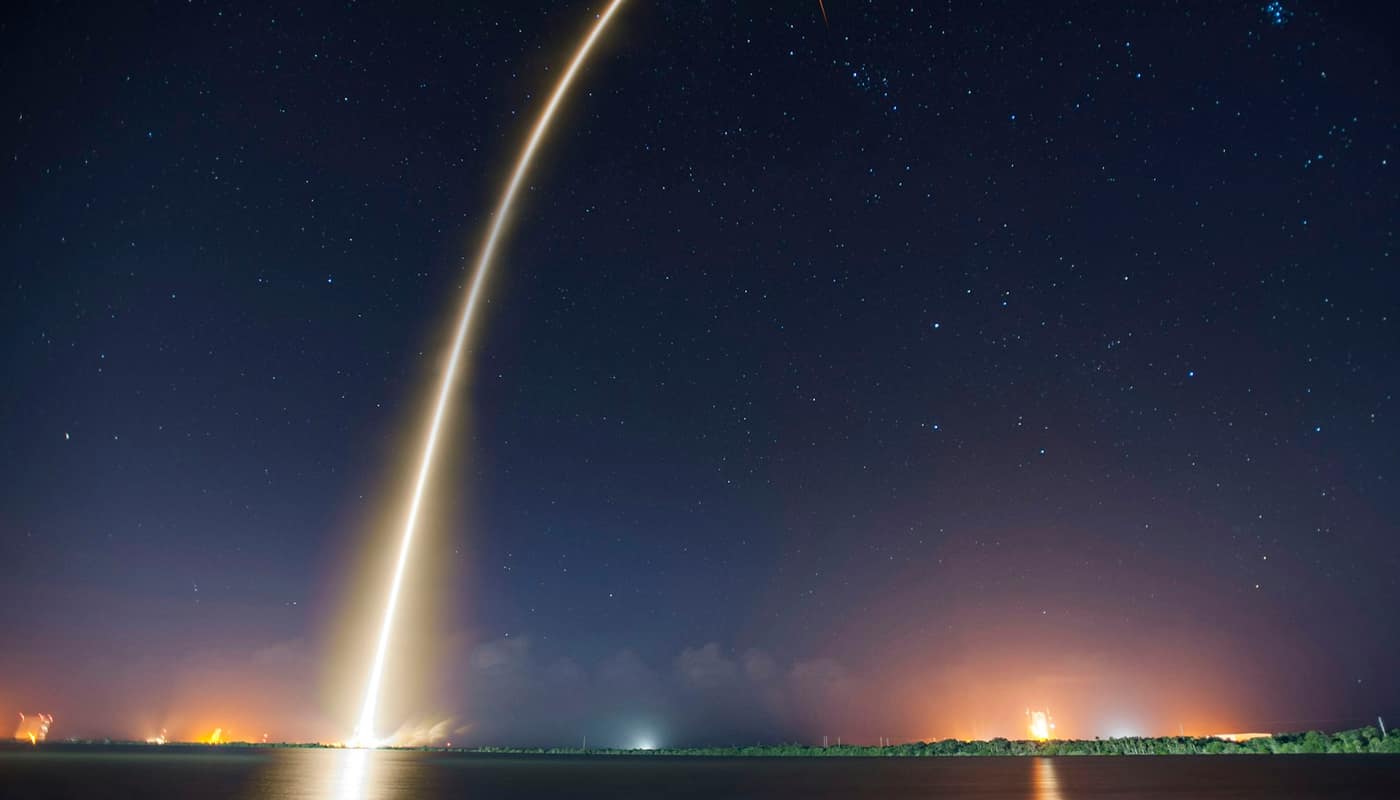
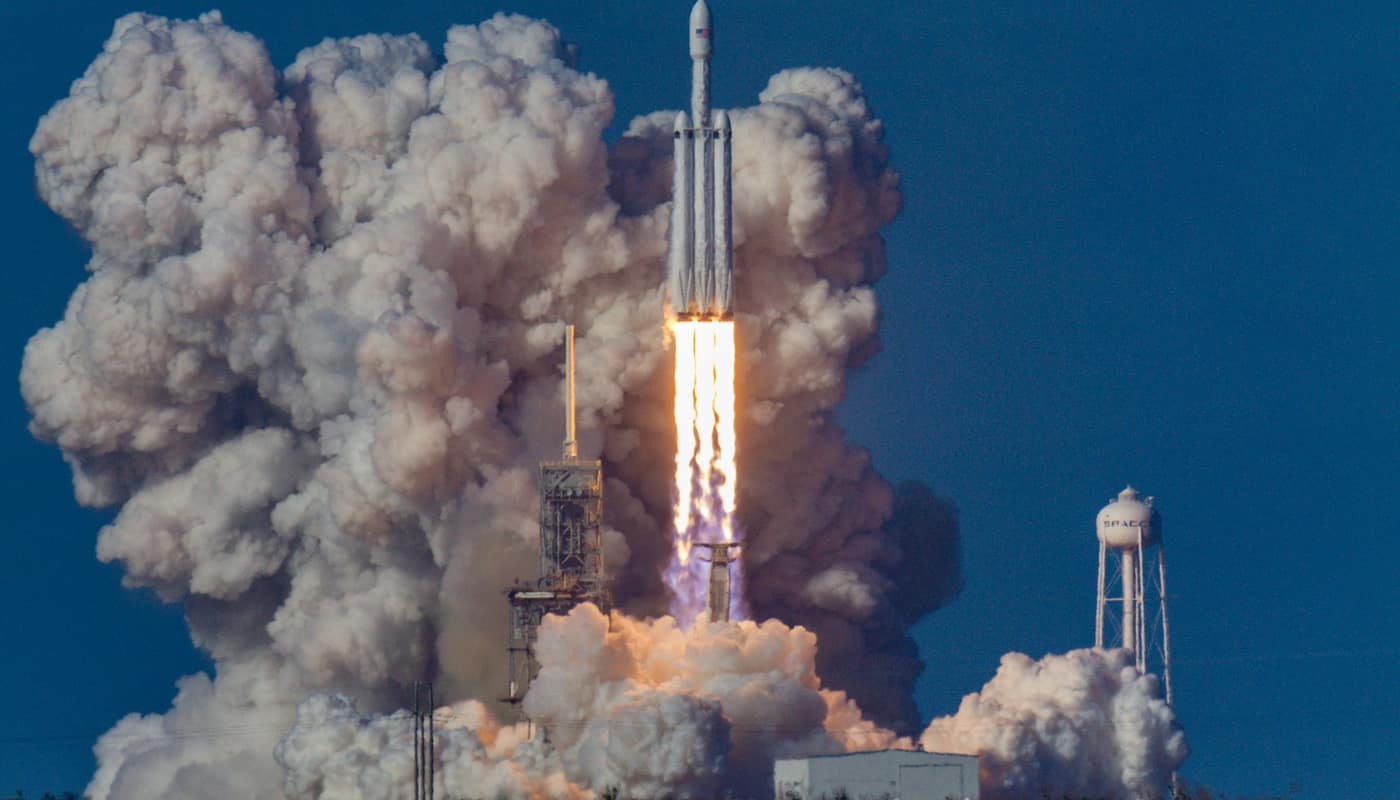
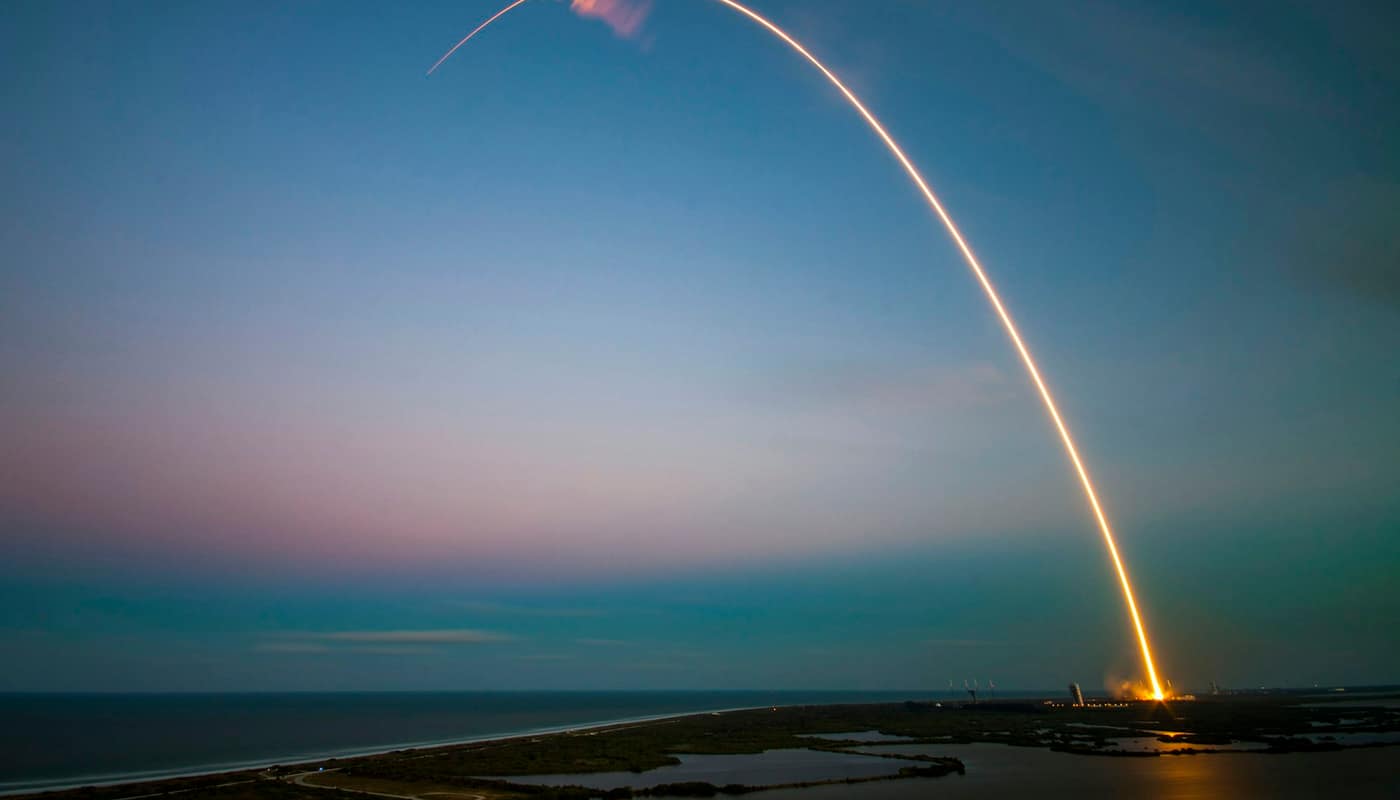
Missions to Mars normally launch in narrow windows. NASA notes these come around every 26 months, when Earth and Mars are positioned so that a direct trip is efficient. ESCAPADE launched on November 13, 2025, on a Blue Origin New Glenn rocket from Cape Canaveral, Florida. At that moment, NASA says, Earth and Mars were on opposite sides of the Sun, so a direct route was not practical.
Instead, the spacecraft spent a year waiting. NASA calls this a “loiter” or Earth-proximity orbit: a kidney-bean-shaped loop around a point called Lagrange point 2, or L2. A Lagrange point is a location where the gravity of the Sun and Earth, together with the motion of the spacecraft, allow it to stay in a relatively stable position relative to both. L2 sits about a million miles from Earth, on the side away from the Sun. NASA’s pages give slightly different figures for how far the loiter orbit extends, so the exact reach of the loop is not pinned down here.
The year of waiting replaced the need for a perfect launch date: the spacecraft came back to Earth in November 2026, when the planets had moved into a favorable arrangement, and used the flyby to leave for Mars.
How does a powered flyby add speed?
A plain gravity assist, sometimes called a slingshot, bends a spacecraft’s path and can change its speed relative to the Sun by borrowing a tiny amount of the planet’s orbital energy. A powered flyby adds an engine burn at the moment of closest approach.
NASA equates this with an Oberth maneuver. The underlying idea, a standard result in orbital mechanics, is that a burn near the bottom of a gravity well is more efficient than the same burn made far away. A spacecraft moves fastest when it is closest to the planet, and the energy added by an engine depends on how fast the spacecraft is already traveling. The same fuel therefore produces a larger gain in speed at closest approach.
NASA reports that each ESCAPADE burn raised the spacecraft’s speed by more than 1,000 miles per hour, from about 6.3 miles per second to about 6.7 miles per second at that point. Illustrative arithmetic: the difference is 0.4 miles per second, and since an hour has 3,600 seconds, that is about 1,440 miles per hour, consistent with “more than 1,000.” The agency’s earlier preview said no Mars-bound spacecraft had completed a powered flyby before.
What the loiter route changes about Mars launches
The practical appeal is flexibility. NASA says the approach allows a Mars-bound spacecraft to launch at almost any time, rather than only during the biennial window. A mission need not match its launch date to planetary alignment; it can leave Earth when its rocket is ready and wait in a holding orbit until the geometry improves.
| Feature | Direct window launch | ESCAPADE-style loiter route |
|---|---|---|
| When it can launch | Roughly every 26 months | Almost any time, per NASA |
| Cruise to Mars | Set by launch window | About 10 months after the Earth flyby |
| Extra requirement | None | A year-long loop and a precise flyby burn |
| Demonstrated by | Many missions | ESCAPADE, for Mars, as of November 2026 |
There is a trade-off, and NASA’s published material does not quantify it: the spacecraft arrive later than a direct trip would have, because of the year spent near Earth. For a mission whose launch vehicle and schedule could not match a direct window, that was acceptable.
What are the spacecraft there to study?
ESCAPADE stands for Escape and Plasma Acceleration and Dynamics Explorers. According to NASA, the mission aims to learn how the solar wind, a stream of charged material from the Sun moving at about a million miles per hour, stripped much of Mars’ atmosphere over time. That loss is thought to have let the planet cool and its surface water evaporate, a picture the mission is designed to test and refine rather than assume.
NASA lists related goals: measuring short-term changes in Mars’ magnetosphere, the region shaped by the planet’s patchy magnetic field; studying the ionosphere, the electrically charged upper atmosphere that future radio and navigation signals would pass through; and helping build space weather protocols for future human missions. The pages reviewed do not name the individual instruments, so this article does not describe them.
Why does it take two spacecraft?
Most Mars orbiters work alone, which means they cannot tell whether a change they see is caused by something happening upstream in the solar wind or by the planet’s own response. NASA says ESCAPADE will be the first science mission to coordinate two orbiters around Mars, giving cause-and-effect measurements from two places at once.
NASA describes two phases. First, the twins fly in the same orbit, one following the other, so they sample the same regions at different times, separated by as little as two minutes. After about six months, they move into different orbits: one farther from Mars to observe the incoming solar wind, and one closer to see how Mars responds in real time. NASA says this second campaign is planned to last about five months.
What comes next, and when?
NASA’s schedule, as of November 2026:
- Cruise: about 10 months, with several trajectory correction maneuvers, which are small engine burns that keep the spacecraft on a precise course.
- Mars arrival: orbit insertion burns, each lasting about 11 minutes, on September 7 and September 9, 2027.
- Commissioning: several months of checkout, with the spacecraft flying together in the same orbit.
- Science operations: expected to begin in June 2028.
- Two-orbit campaign: roughly six months after that, lasting about five months.
Check on the dates: from the November 7, 2026 burn to September 7, 2027 is just under ten months, which matches NASA’s “about 10 months.” These are agency plans, and spaceflight schedules can slip.
What is still unknown?
Several things are not yet settled in the public record. The spacecraft have not yet reached Mars, and the orbit insertion burns are the next high-stakes event. NASA says it collected extra science from a distant region of Earth’s magnetotail, the stretched tail of Earth’s magnetic environment, that no spacecraft had directly explored before, but it says those results are expected later, so no findings can be reported yet.
The material reviewed also does not give the spacecraft’s mass, fuel margins or the exact instrument list, and it does not compare the mission’s cost with a conventional launch. Those gaps limit how far the loiter route can be judged as a general model for future missions. Independent confirmation beyond NASA’s own pages was not found; the agency and its university partners are the primary source for these details.
How this fits with other space-engineering stories
The flyby is one example of getting more from limited propellant, a theme that also runs through reusable rockets that land and fly again. Mars science also depends on understanding how radiation and charged particles behave in space, a problem that connects loosely to the plasma physics behind nuclear fusion. And for the longer view of how space science reads the history of other worlds, see how the James Webb Space Telescope looks back in time.
A proven trajectory, an unproven destination
The November flybys show that a powered Earth flyby can send a Mars-bound spacecraft on its way, and that a year-long wait near Earth can substitute for a perfectly timed launch. The scientific payoff, an answer to how Mars lost its air, still depends on arrival in September 2027 and on months of paired measurements that begin in 2028.
This article is general information about a public space mission and is not engineering advice.
Sources: NASA