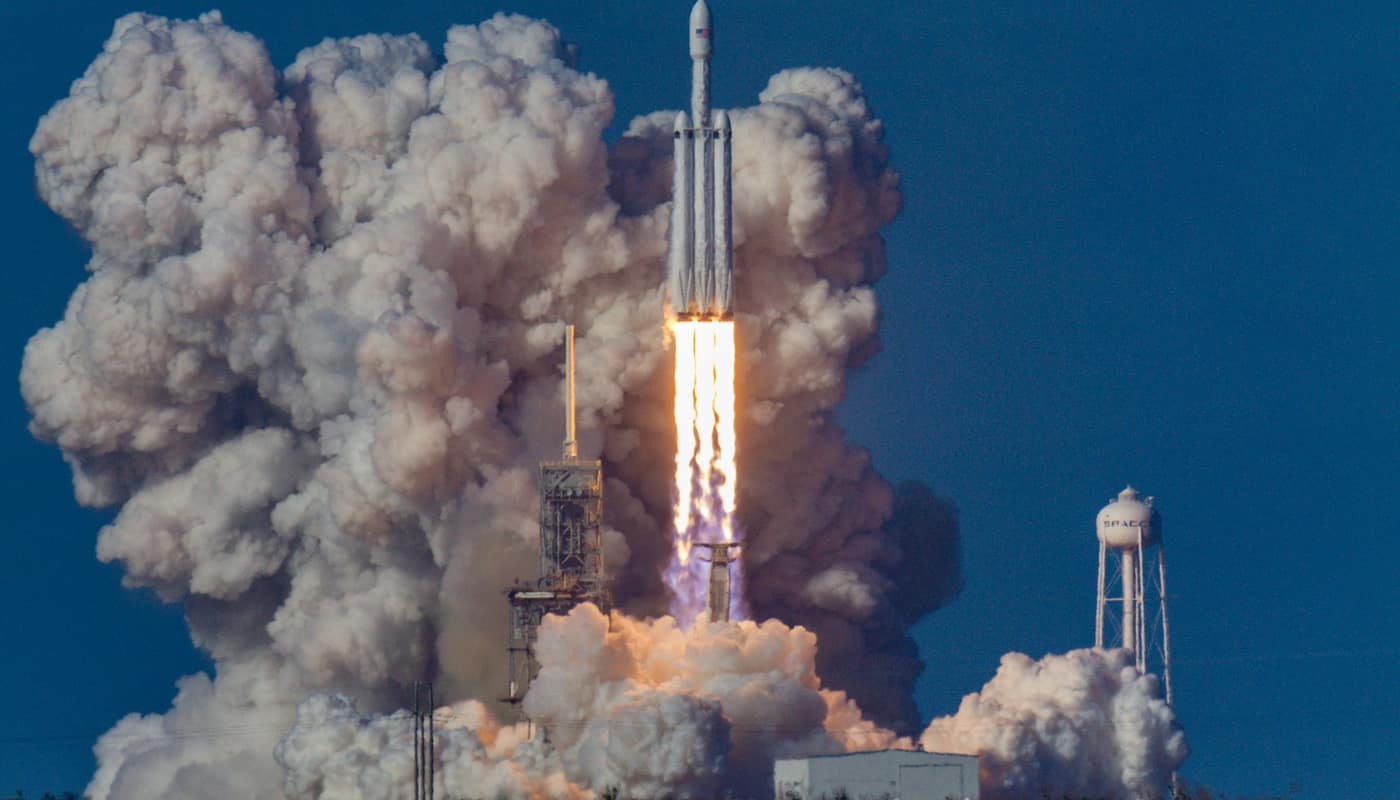
On December 5, 2022, a laser facility in California delivered 2.05 megajoules of energy to a fuel pellet smaller than a pea and got 3.15 megajoules of fusion energy back. The announcement was widely described as a breakthrough, and in scientific terms it was. It was also a long way from a power plant, and the gap between those two statements is what this article is about.
The principle
In fusion, light atomic nuclei merge into a heavier one and release energy. The Sun does it constantly. For power on Earth, researchers focus on two heavy forms of hydrogen, deuterium and tritium, whose fusion produces a helium nucleus and a fast neutron. The International Thermonuclear Experimental Reactor project, ITER, calls deuterium and tritium the most efficient fuel pairing for laboratory fusion.
Why it is so hard
Nuclei repel each other, so forcing them together takes extreme conditions. ITER says deuterium-tritium fusion in the laboratory requires temperatures of about 150 million degrees Celsius, roughly ten times hotter than the Sun’s core at 15 million. The Sun can get by with lower temperatures because its gravity squeezes the fuel; a machine on Earth has to make up for that with heat.
At such temperatures the fuel is a plasma, a gas of charged particles. It is turbulent, loses heat quickly and cannot touch the walls of any container. Holding it stable for long enough, while keeping it hot and dense, is the central engineering problem.
Two ways to hold the fuel
Researchers pursue two broad strategies. Magnetic confinement uses strong magnetic fields to hold plasma in a ring-shaped chamber. The US Department of Energy describes the tokamak, which confines plasma in a doughnut shape using magnetic fields, as the leading concept for future fusion plants. Its relative, the stellarator, uses externally wound, twisted coils instead of a current in the plasma, which the Department says can require less power to sustain the plasma, at the price of more complex magnet coils.
Inertial confinement takes the opposite approach: compress a tiny fuel capsule so fast that it fuses before it can blow apart. The National Ignition Facility, NIF, at Lawrence Livermore National Laboratory does this with 192 laser beams aimed at a target.
What the NIF result did and did not show
Fusion researchers distinguish between scientific gain and engineering gain, and headlines often blur them.
Scientific gain compares fusion energy produced with the energy delivered to the fuel. On December 5, 2022, NIF’s lasers delivered 2.05 megajoules to the target and the fuel released 3.15 megajoules, a target gain of about 1.5. That is the first laboratory ignition, a result the laboratory says has been repeated since. A shot in February 2024 yielded 5.2 megajoules from 2.2 megajoules of laser energy, and the laboratory has reported a higher record since.
Engineering gain compares usable electricity out with all the electricity a facility consumes, and that is the number that matters for a power plant. NIF was not built to produce it. Livermore’s own FAQ describes the facility as a national user facility, whose purposes include stockpile stewardship and high-energy-density science, with ignition advancing the science toward fusion as an eventual energy source. The electricity used to charge the lasers is far greater than the energy that reached the target, which is why the 2022 result is a physics milestone and not a step you can plug in.
What ITER is for
ITER, under construction in southern France, takes the magnetic route. Its goal is to produce 500 megawatts of fusion power from 50 megawatts of power injected to heat the plasma, a tenfold gain. It will not produce electricity: ITER’s own FAQ states so plainly, describing its purpose as resolving scientific and technical issues on the path to demonstration power plants. Under its revised baseline, the start of deuterium-tritium operation is set for 2039, which ITER describes as a four-year delay from the 2016 reference.
The unglamorous problems
Even if plasma physics were solved, a power plant would face problems of materials and fuel.
Tritium is the first. It decays with a half-life of about 12 years and has no practical natural supply, according to presentations from the International Atomic Energy Agency, so a plant must breed its own from lithium in a blanket around the reactor and must breed more than it burns. That has to be demonstrated at scale.
Neutrons are the second. Fusion’s main output is a stream of fast neutrons, and they damage and activate the surrounding structure, so components closest to the plasma must withstand extreme heat and radiation for years. Capturing the heat and turning it into electricity, then keeping a plant reliable and maintainable, are further steps, and the economics must eventually compete with other low-carbon sources.
Reading fusion news
A few questions help. Was the gain scientific or engineering? How long did the reaction last? Was the result from a peer-reviewed experiment or a company announcement? Is it a physics experiment, a pilot plant or a commercial design? Claims of imminent commercial power deserve evidence for each remaining step, not just the plasma physics.