Asteroids are tracked in three broad steps: wide-field telescopes find objects that move against the background stars, observers around the world report those positions to a central archive, and scientists use the accumulated measurements to calculate an orbit and project where the object will be in the future. This article explains each step, what the numbers look like today, and what tracking cannot yet do.
How are asteroids tracked, step by step?
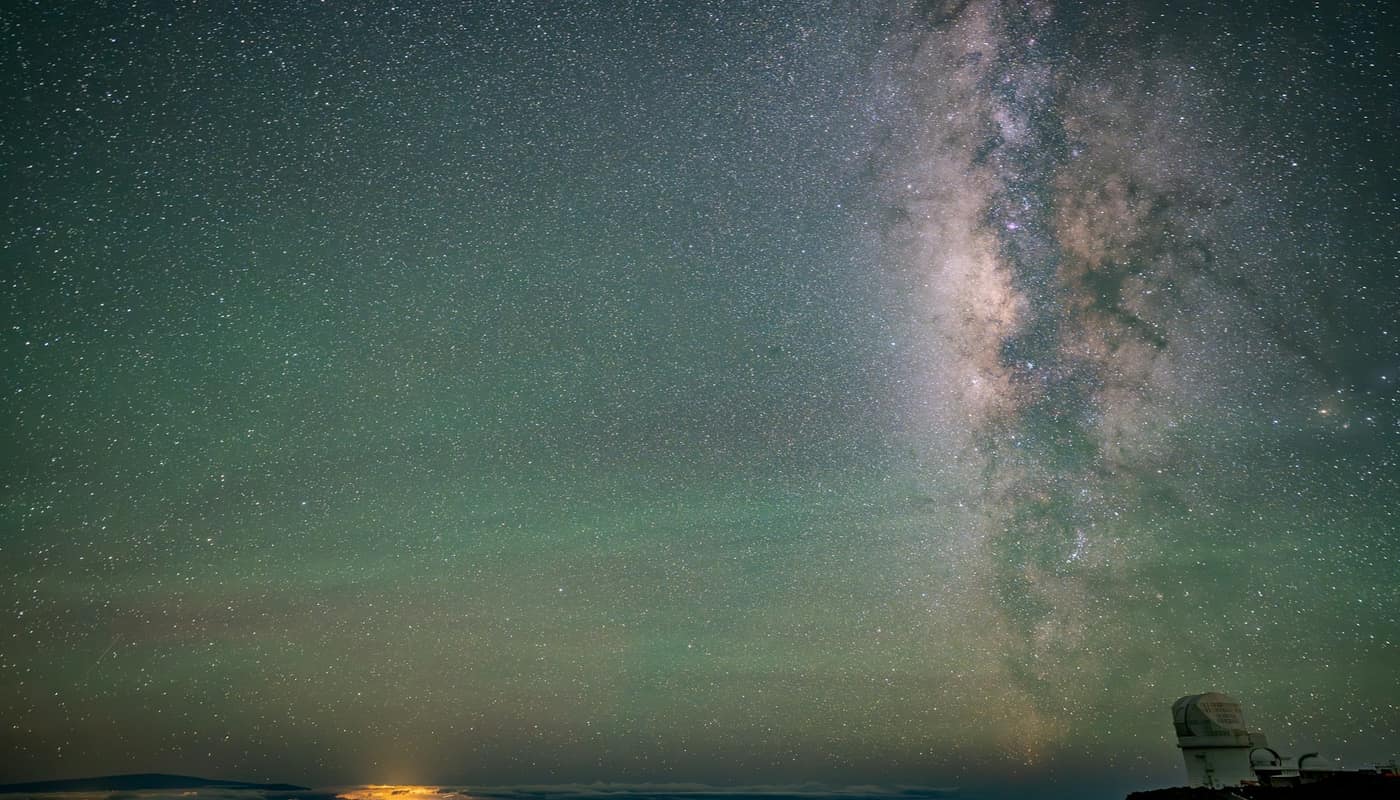
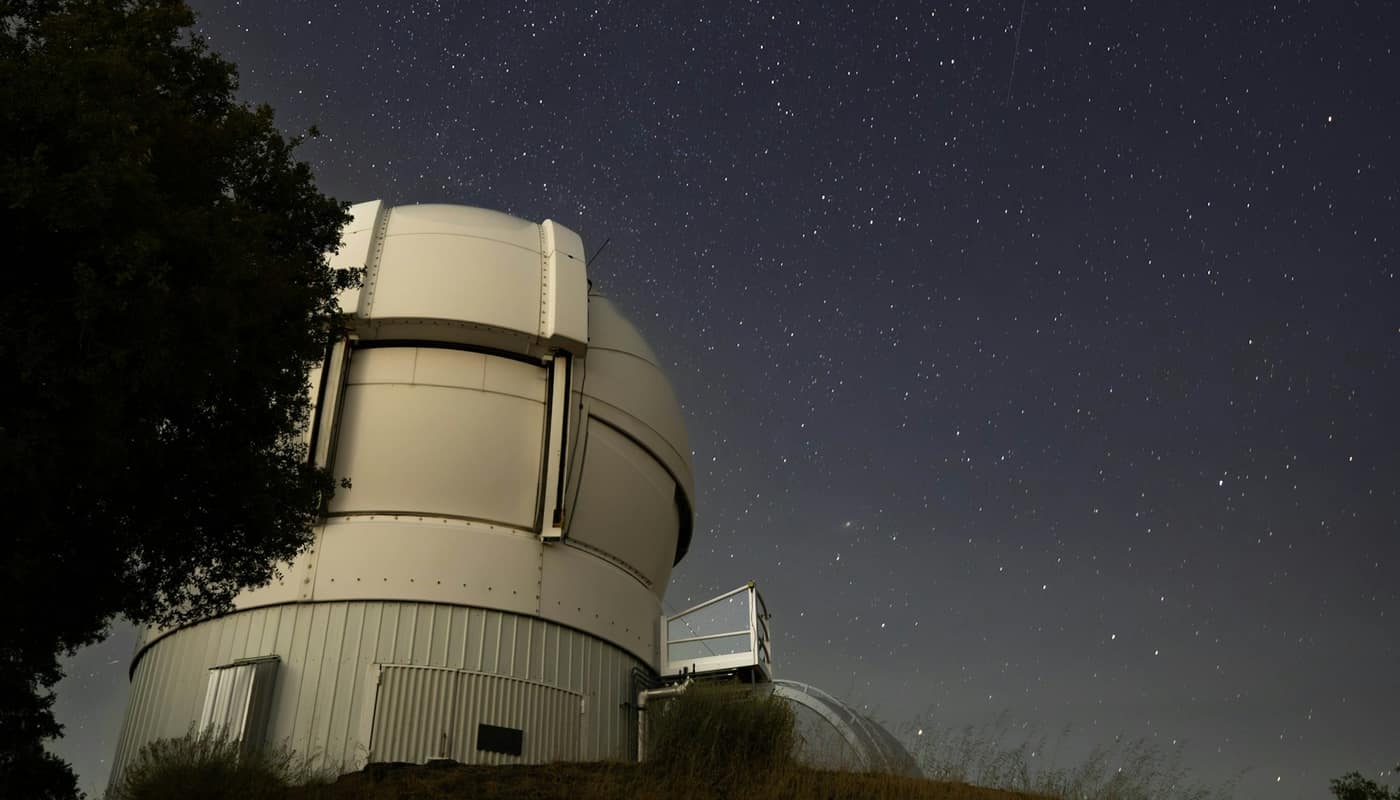
The process starts with a simple observation. Stars appear fixed from one image to the next, but a nearby asteroid shifts position. According to NASA, wide-field survey telescopes scan the sky looking for exactly these moving points of light. The major survey projects NASA names are the Catalina Sky Survey, Pan-STARRS, ATLAS and LINEAR.
Once a candidate is spotted, its measured positions are sent to the Minor Planet Center, which NASA describes as the internationally agreed public archive of small-body orbit data. The center is sanctioned by the International Astronomical Union, and it alerts observers worldwide when a new near-Earth object is found so they can take follow-up measurements.
Finally, NASA’s Center for Near-Earth Object Studies (CNEOS), hosted at the Jet Propulsion Laboratory, uses the archived measurements to compute precise orbits and to analyze where hazardous asteroids may be in the future. If an impact were ever predicted, NASA says the center would also compute when and where it would happen.
What counts as a near-Earth object?
A near-Earth object, or NEO, is an asteroid or comet whose orbit brings it into the neighborhood of Earth’s orbit. Most asteroids never come close. NASA says most of them orbit the Sun in the main asteroid belt between Mars and Jupiter, and that all asteroids combined have less mass than Earth’s Moon. Tracking efforts concentrate on the relatively small group whose paths bring them near our planet.
Size matters for priorities. Congress has directed NASA to find, track and characterize at least 90 percent of the predicted number of NEOs that are 140 meters (about 460 feet) across or larger.
Why a single sighting is not enough
One image tells you where an asteroid is, not where it is going. An orbit is a mathematical fit to a series of positions, and it becomes more reliable as measurements are added over days, weeks and years. A short observation arc leaves a wide range of possible paths, which is why a newly found object may first have a large uncertainty that shrinks with later data.
That is why follow-up matters. NASA lists projects such as Spacewatch, Las Cumbres Observatory and Lowell Observatory’s MANOS program as observers that revisit discovered NEOs to refine their orbits and to study composition, rotation, shape and size.
Radar and infrared: sharpening the picture
Two other tools add detail that visible-light telescopes cannot.
- Planetary radar bounces radio signals off an object passing within a few million miles. NASA says this refines orbits and can reveal shape. The agency’s page lists JPL’s planetary radar, the Goldstone antenna and Arecibo among radar facilities, but does not state their current status, so readers should not assume all are operating.
- Infrared surveys detect heat rather than reflected sunlight. NASA says the repurposed NEOWISE space telescope provided size measurements more precise than optical methods allow, because a dark rock reflects little light but still glows in infrared.
How many asteroids are known today?
According to a NASA infographic with counts as of December 3, 2025, astronomers had discovered 39,123 near-Earth asteroids of all sizes and had submitted 500 million observations to the Minor Planet Center. The same page gives these figures by size:
| Size class | Discovered | Estimated remaining |
|---|---|---|
| Larger than 1 kilometer | 873 | about 50 |
| Larger than 140 meters | 11,343 | about 14,000 |
Illustrative arithmetic: 11,343 found plus roughly 14,000 remaining gives about 25,300 objects of 140 meters or more, so a little under 45 percent have been found. That is consistent with NASA’s statement that fewer than half of an estimated 25,000 such objects have been found, and it shows why the 90 percent goal has not yet been met. Large kilometer-scale objects are the best cataloged group because they are bright and easy to see.
Does tracking mean an asteroid is known to be heading for Earth?
No, and this is the most common misunderstanding. A catalog entry is not a prediction of impact. NASA states that no known asteroid larger than 140 meters has a significant chance of hitting Earth in the next 100 years. Most newly discovered objects are quickly shown to be harmless once more observations narrow their paths.
Close approaches are also not close calls in the dramatic sense. The same NASA infographic reports that 12 near-Earth asteroids passed closer than the Moon over the 30 days before its count and 176 over the previous 365 days. Europe runs a parallel effort. The European Space Agency says its Planetary Defence Office and Near-Earth Object Coordination Centre maintain a database that is updated daily and that includes a risk list and a close-approaches list. ESA also operates automated telescopes it calls Flyeye instruments.
What can tracking not see yet?
Some objects are hard to catch from the ground:
- Small objects. A rock a few meters across is faint and may only be seen days or hours before it arrives.
- Dark objects. Asteroids that reflect little visible light are harder to spot with optical telescopes.
- Objects in the Sun’s glare. Ground telescopes cannot observe near the Sun or in daylight, so asteroids approaching from that direction can slip by.
NASA’s NEO Surveyor mission is designed to address part of that gap. The agency calls it the first space telescope specifically designed to detect asteroids and comets that may be hazards to Earth. It uses infrared detectors to find dark objects and is meant to find asteroids approaching from the Sun’s direction and those leading and trailing Earth’s orbit. NASA lists its launch as no earlier than September 2027, so as of this article’s date it has not flown.
Can a threatening asteroid be moved?
Tracking only matters if something can be done with the result, and the one real-world test so far is NASA’s DART mission. According to NASA, DART impacted the asteroid moonlet Dimorphos on September 26, 2022. Dimorphos is about 160 meters across and orbits a larger asteroid, Didymos, about 780 meters across. It was a technology demonstration against a harmless target, not a response to a threat.
ESA states that it aims to deflect asteroids smaller than 1 kilometer if they are known more than two years in advance. That condition shows the link back to tracking: the earlier a dangerous object is found and its orbit pinned down, the more options exist. ESA’s page also reports that its Hera spacecraft reached the Didymos system in November 2026 and found a stadium-sized crater left by the DART impact. That is ESA’s own account, and readers should look for the mission’s detailed findings as they are published.
Common questions about asteroid tracking
Can amateurs help? Positions are reported to a public archive that is open to observers worldwide, and the Minor Planet Center’s alerts exist to encourage follow-up observations. The sources reviewed here do not give participation requirements, so interested readers should consult the center directly.
Do the numbers change? Constantly. The counts above are a snapshot from December 2025, and new discoveries are added continuously. Any total you see should be read with its date.
Where can readers learn more about orbits and space science? Start with how rockets reach orbit speed. For another space-science instrument that depends on careful positioning, see the James Webb telescope’s orbit and cold, and for how agencies plan interplanetary trajectories, see how twin probes reach Mars.
A catalog that keeps growing
Asteroid tracking is a patient process of repeated measurement: telescopes find moving dots, a central archive collects the positions, and orbit calculations turn them into forecasts that can reach decades ahead. The record so far is reassuring for the objects that have been found, since NASA reports no significant impact chance within 100 years for any known asteroid above 140 meters. The open question is the large share of that size class that has not yet been discovered, and new instruments such as NEO Surveyor are aimed at it.
This article is general information about astronomy and planetary defense and does not replace guidance from space agencies or emergency authorities.
Sources: NASA; European Space Agency