AI bias is a systematic pattern in which an AI system produces results that are skewed or unfair for some people or groups. According to the US National Institute of Standards and Technology (NIST), it has several sources, and biased training data is only one of them.
This guide explains where bias comes from, what measured examples look like, which ideas about it are misleading, and what organizations can realistically do.
What does “bias” mean when people talk about AI?
In everyday use, “bias” suggests prejudice held by a person. In AI work it has a broader and more technical meaning. A statistician uses the word for any systematic error: an estimate that leans consistently in one direction. In the AI risk literature, the concern is narrower and more practical: errors or design choices that lead to harmful outcomes for particular groups.
NIST’s 2022 publication Towards a Standard for Identifying and Managing Bias in Artificial Intelligence (Special Publication 1270, published March 2022) states in its abstract that biases “remain endemic across technology processes and can lead to harmful impacts regardless of intent.” The last phrase matters. A system can treat groups unequally without anyone designing it to.
Where does AI bias come from?
NIST’s accompanying news release describes three broad kinds of bias. They overlap, and the agency says they can combine into “a pernicious mixture.”
| Kind | What it means | Example from NIST |
|---|---|---|
| Computational and statistical | Flaws in the data or the programming | A model trained on a dataset that underrepresents a gender or ethnic group |
| Human | The ways people fill gaps and interpret data | A person’s neighborhood raising the odds that authorities treat them as a suspect |
| Systemic | Institutions operating in ways that disadvantage social groups | Discrimination based on race |
NIST calls the first category “highly important” but incomplete. Its argument is that a purely technical view misses the second and third. As NIST researcher Reva Schwartz put it in the release, “Context is everything.”
Data problems
The most familiar cause is unrepresentative data. If a system learns mostly from examples of one group, it tends to perform worse on others. A related problem is that historical records reflect past decisions. A model trained to predict who was approved for loans in the past may learn the patterns of earlier human choices, including unfair ones.
Design and use problems
Bias also enters through choices that are not about data at all: which outcome the system is asked to predict, which errors are treated as acceptable, who is consulted during design, and where the tool is deployed. A system built for one setting and used in another can behave differently from how its builders expected.
What does measured bias look like?
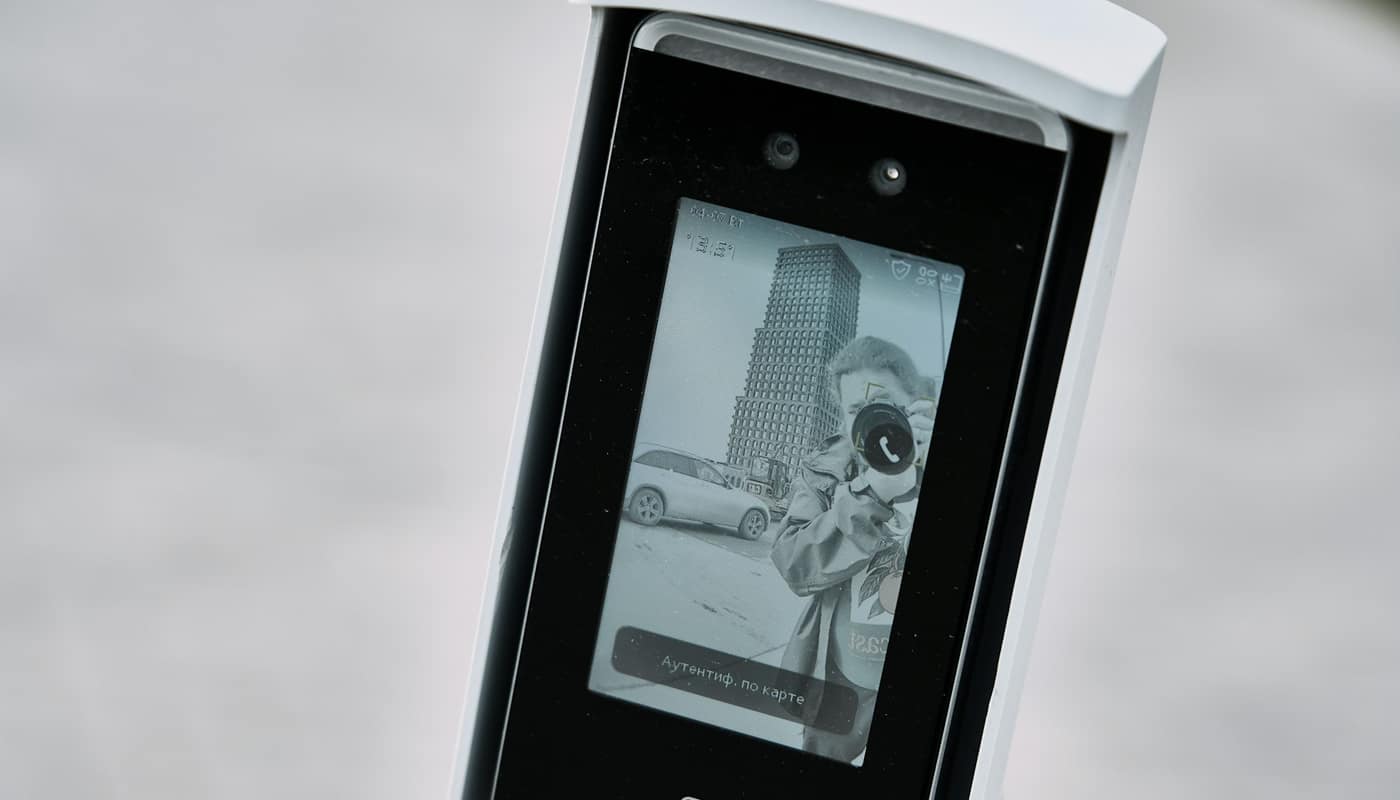
Face recognition offers one of the clearest public measurements. In December 2019, NIST published Face Recognition Vendor Test Part 3: Demographic Effects (NISTIR 8280). It tested 189 algorithms from 99 developers on 18.27 million images of 8.49 million people. The images came from State Department, Department of Homeland Security and FBI operational databases.
For one-to-one matching, such as checking whether a photo matches the passport it claims to match, NIST found that Asian and African American faces produced more false positives than Caucasian faces. In NIST’s words, “the differentials often ranged from a factor of 10 to 100 times,” depending on the algorithm. A false positive means the system wrongly declares two different people to be the same person.
For one-to-many searches, which compare a face against a database, NIST reported higher false positive rates for African American women in a test using 1.6 million FBI domestic mugshots.
Three caveats from the same report are as important as the headline:
- Results varied by algorithm. NIST says it is “usually incorrect to make statements across algorithms.”
- Some algorithms showed much smaller gaps. Some developed in Asia did not show the large Asian-versus-Caucasian difference, and the most equitable algorithms in the one-to-many test were also among the most accurate.
- The study did not investigate causes. It pointed to training data as a possible area for future research.
These tests date from 2019. They show that measurable demographic differences existed in the systems tested then, not how any current product performs.
Is AI bias just a data problem?
No, and this is the most common misconception. Better data helps, but NIST’s position is that “socio-technical” thinking is needed, meaning attention to the people, institutions and settings around the software. Purely technical fixes, the agency says, “will come up short.”
Other misconceptions are worth correcting:
- “A bias-free system is possible.” Because bias has social and statistical sources, the realistic goal is identifying and managing it, which is the wording NIST uses in its publication title.
- “Bias means the developers meant harm.” NIST’s abstract says harm can occur regardless of intent.
- “A machine decision is neutral.” A system encodes choices made by people, including what to measure.
- “One fairness test settles it.” The face recognition results show that outcomes differ across algorithms, so a single audit of one system says little about another.
Bias is also distinct from other well-known failures. A chatbot inventing a fact is a different problem, covered in our explainer on AI hallucinations. Bias is about consistent patterns that fall unevenly on groups of people.
How do organizations try to manage it?
NIST’s AI Risk Management Framework, released as version 1.0 on January 26, 2023, is a voluntary framework for handling AI risks, and harmful bias is one of the risks it addresses. Our overview of the NIST AI Risk Management Framework explains its structure. According to NIST’s page, the framework is being revised as part of the White House AI Action Plan, so details may change.
From the bias news release, NIST’s recommendations include:
- Look for sources of bias beyond data and algorithms, including societal context.
- Use a socio-technical approach.
- Involve experts from many fields, not only engineering, and listen to affected organizations and communities.
- Develop measurement techniques that account for social factors, which NIST describes as an emerging area.
In practice, that means testing a system on the groups it will actually affect, reporting results by group rather than only as an average, and keeping people able to review and challenge decisions that matter, such as school admissions, loan approvals or rental applications, which NIST lists as areas where AI decisions affect people.
Training methods can also shape behavior. How a model learns from human feedback is described in our guide to how AI chatbots are trained, and the choices made there are one more place where human judgments enter a system.
What varies by place and system?
Bias is not a single measurable property that a product either has or lacks. It varies with the task, the population, the data and the version of the software. A system that is accurate for one group in one country may not be elsewhere. The NIST face recognition work illustrates this: the gaps differed by algorithm and even by where the algorithm was developed.
Rules also differ by jurisdiction. In the European Union, binding AI rules are phasing in on a changing timeline; our article on the EU AI Act high-risk delay covers what applies now. NIST’s framework, by contrast, is voluntary.
What to take from this
AI bias is a systematic skew in how a system treats people, and it can arise from data, from human choices and from institutions, often in combination. NIST’s evidence shows the effects can be large for some systems and small for others, which is why claims about “AI” in general are less useful than measurements of a specific system on a specific task.
For a reader, the practical questions are simple: what was the system tested on, were results broken down by group, and can a person appeal a decision it influences? The science of measuring social factors is still developing, and that is stated plainly by NIST itself.
This article is general information, not legal or professional advice.
Sources: National Institute of Standards and Technology